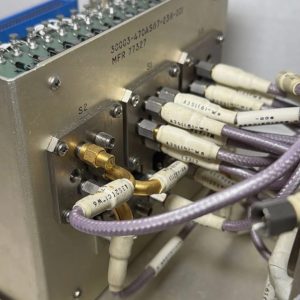
The Aviation Switching Module – NSN 4920-01-250-2696 (AS-IS / Untested) provides aviation maintenance organizations, military-surplus buyers, aerospace technicians, equipment restorers, and collectors with access to a catalog-identified switching component whose operational status has not been confirmed.
An Aircraft Switching Module and Aerospace Switching Module should be treated as specialized equipment rather than universal components that can be connected to any aircraft electrical system.
An Aircraft Electrical Switching Module, Aviation Electrical Control Module, Aircraft Power Switching Module, Aerospace Electrical Control Unit, and Aircraft Signal Switching Module may describe related switching or control functions, but the exact purpose of this NSN should be verified before use.
An Aircraft Switching Unit can support specialized signal or circuit management, but an Aerospace Power Distribution Module or Aviation Power Control Module may use different internal architecture and electrical requirements.
Overview of the Aviation Switching Module
NSN 4920-01-250-2696 should be compared with the data plate, manufacturer number, contract markings, serial number, connector layout, and available documentation on the actual unit.
Military or aviation-surplus components may carry replacement numbers, superseded numbers, modification markings, or contract identifiers that assist research.
AS-IS Aerospace Equipment Considerations
The condition description should be understood as a limitation rather than a suggestion that the unit is probably operational.
An untested component should not be connected directly to aircraft wiring, expensive test equipment, batteries, laboratory supplies, or unknown power sources.
Aircraft Circuit Selection Equipment
An Aircraft Switching Module may provide circuit selection, signal routing, controlled connection, isolation, mode selection, or interface functions within compatible aviation equipment.
Switch movement can be checked gently for obvious binding or damage, but mechanical movement does not establish electrical operation.
Aerospace Switching Module Construction
The enclosure should be inspected for dents, cracks, corrosion, missing screws, altered holes, broken seals, and unauthorized repairs.
Proper connector protection preserves the Aerospace Switching Module for future testing or restoration.
Aircraft Electrical Switching Module Inspection
A qualified technician should determine whether additional internal inspection is justified.
Loose wires, nonstandard components, replaced relays, cut conductors, or evidence of field repair should be recorded.
Maintaining Electrical Control Equipment
Similar-looking modules may use completely different pin assignments and operating voltages.
Careful preservation supports future study and accurate Aviation Electrical Control Module documentation.
Power Switching Module Inspection
Current capacity, voltage, duty cycle, contact type, protection requirements, and load characteristics should be confirmed before testing.
A module with unknown electrical condition should remain clearly labeled as untested until formal evaluation occurs.
Aerospace Module Troubleshooting
Troubleshooting requires a logical sequence based on technical information rather than random power application.
Every repair should be photographed and recorded if the module is restored.
Maintaining Aircraft Interface Hardware
Signal circuits can be sensitive to grounding, shielding, contact resistance, connector condition, and electromagnetic interference.
Missing or corroded bonding components may affect noise, interference, or reliability.
Control Module Compatibility Review
A module removed from its original system can be difficult to test without supporting equipment and documentation.
Compatibility should be verified through NSN, part number, manufacturer, connector layout, revision level, modification status, and equipment application.
Aircraft Test and Support Equipment
The unit can provide parts, reference information, display value, training opportunities, or a candidate for professional restoration.
Removable demonstration leads or external training fixtures may preserve originality better than permanent alteration.
Aerospace Power Distribution Module Considerations
Professional evaluation helps determine whether the unit serves a power-distribution role or another specialized function.
Preserving the original structure protects the Aerospace Power Distribution Module and its resale value.
Aircraft Module Functional Evaluation
The inspection should distinguish cosmetic wear from damage that may affect electrical operation or mounting.
Limited testing should not be described as complete serviceability verification.
Aviation Electrical Power Management
The seller should avoid presenting the module as compatible with commercial aircraft, helicopters, military aircraft, or UAVs without evidence.
Technicians should inspect for capacitors, transformers, relays, damaged insulation, or hazardous residues before opening or testing the unit.
Understanding an Aircraft Electronic Switching System
A systems approach supports more accurate troubleshooting and restoration.
Repair documentation can help distinguish module faults from system faults.
Aerospace Switching Unit Storage and Handling
Proper storage helps preserve the Aerospace Switching Unit for testing, restoration, or collection.
Loose accessories should Aerospace Switching Module be wrapped separately and inventoried before packaging.
Aircraft Electrical Module Buying Considerations
AS-IS equipment may offer attractive value when the purchaser has the knowledge and resources required for evaluation.
Unknown information should remain clearly identified as unknown.
Inspecting the Aviation Switching Module Before Purchase
The buyer should request enough information for an aviation electronics technician, aerospace-equipment specialist, or experienced surplus buyer to evaluate the unit.
- Resolve identity, configuration, application, and package-completeness questions before payment.
- Inspect switches, knobs, indicators, connectors, pins, wiring, and terminals for damage, looseness, contamination, overheating, or unauthorized repair.
- Require packaging that protects connectors, switches, labels, enclosure corners, mounting brackets, controls, and loose accessories from movement and impact.
Professional Bench Evaluation
A methodical process reduces the risk of damaging rare aviation equipment.
Partial operation should not be presented as complete certification, calibration, or airworthiness.
Repairing Legacy Aviation Control Hardware
Replacement parts should be selected according to electrical rating, mechanical fit, material, environmental requirements, and original design intent.
Every repair should record the date, technician, fault found, parts replaced, measurements, testing performed, and remaining limitations.
Selecting a Surplus Aerospace Switching Unit
For the right purchaser, the unit can offer a useful foundation for technical research, controlled troubleshooting, component recovery, or legacy-equipment restoration.
The strongest buying decision begins with confirming the NSN, manufacturer, part number, serial number, configuration, connector layout, condition, storage history, modification status, included equipment, and intended use.
Whether the requirement is an Aircraft Switching Module, Aerospace Switching Module, Aircraft Electrical Switching Module, or Aviation Electrical Control Module, exact identification should guide the purchase.
With prompt attention to switches, connectors, wiring, enclosure condition, corrosion, labels, and internal components, the module can preserve its technical and commercial potential.